I know your first time out on skis/board can be intimidating. I get that. I didn’t start skiing until I was 23, and even then it wasn’t for recreational downhill pleasure; I approached frozen waterfalls to ice climb. As I tried to learn to ski, I couldn’t believe how easy people made it look.
So if you are just starting out, you may be wondering which you should take up: skiing or snowboarding. For me, the answer comes down to whether you'll be doing this a lot in the future or only going out a few times a year. I ask because they have very different learning curves. Let me try and explain the differences. I have no skin in the game. I can do both. As a professional ski patroller, skis are the obvious choice. The ability to move around while still strapped to my gear, shuffle over flats while pulling a toboggan, is reason enough to choose skis. Recreationally, it becomes less clear. There is something about riding a board through 20 cm of fresh pow that those who only ski will never understand. I won’t even try to find the words to describe it, because you have to experience it.
Which is easier to learn?
Let’s address one of the most often asked questions. Which is easier to learn? This is an easy one to answer. Snowboarding is definitely the easier piece of equipment to become proficient at. There is a joke: “What is the difference between an absolute beginner snowboarder and an instructor? A: A long weekend.” It’s not really a joke. Not because it’s not funny, but because it is almost true. What makes this so hard to believe is how hard you get slammed, and how often, in the first couple of days. When you ride down and catch an edge, the speed (energy) times your weight (mass) transfers instantly to the slope, turning you into an instant yard sale. This can hurt, and hurt a lot. An interesting statistic: 60% of all snowboarding accidents happen within the first three days. If you get past the first three days, you are out of a huge demographic.
“What is the difference between an absolute beginner snowboarder and an instructor?”
A long weekend.
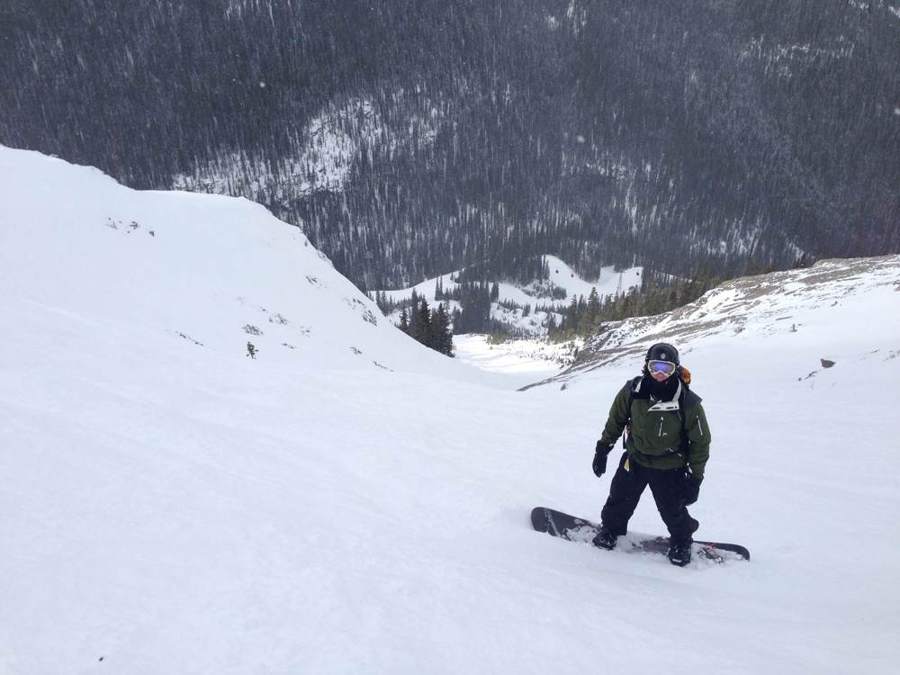
What makes snowboarding easy is that the equipment works exactly how you think it will work. It is similar to skateboarding or surfing. You push on the edge of a blade, and it produces a turn. The other thing to note is that you have both feet strapped to one device. I rarely have to deal with twisted knee injuries or boot-top fractures because of this. The most common injury is a strained or broken wrist from trying to arrest a fall with a straight arm. This is by far the most common injury. What makes it seem difficult is that you get slammed right from the start on day one, while your buddy, who started at the same time, is on skis and isn’t getting slammed like you are. Visually, skiing looks a lot easier to learn. Physically, it seems to hurt a lot less.
The upside of boarding is that you learn very quickly to ride one edge or the other. So you always favour the toe or heel side and never try to ride the board flat; that is when and how you lose control. The edge favour can be subtle and not noticeable to an observer, but it is there. For best results, take a lesson. An instructor will quickly progress your learning curve to the point that after one or two lessons you can rapidly progress on your own. In fact, if you go out a couple of times a week for a month, you will most likely reach an advanced intermediate stage. This is rapid progress and opens up the vast majority of the ski hill to you, no matter the property. Meanwhile, your skiing buddy who started at the same time as you has barely gotten past the “pizza, French fry” stage of their skiing career. Boards also ride much better in deep powder snow. It is a combination of their design and function. Riding a board is what you are doing.
So why ski?
So why take up skiing if boarding is so much easier to learn? My advice is: don’t if you are just planning to visit the hill a couple of times a year with friends who have been doing it for a while. Skiing will require a lot more dedication to master. You will never actually master it. I have worked as a heli-ski guide, backcountry touring and for several years as a pro ski patrol, and I still feel like I have a lot to learn. I consider myself a strong skier, not a good skier.
In skiing, the advantage is that it is hands down the most efficient way to move through the mountains in winter. This is true on a ski hill as much as it is in terms of backcountry. If you have any aspirations at all of becoming a professional in the ski industry (not including a snowboard instructor, obviously), start with and stick with skiing. This holds true for avalanche forecasters, ski guides, and patrollers.
Why skiing takes longer
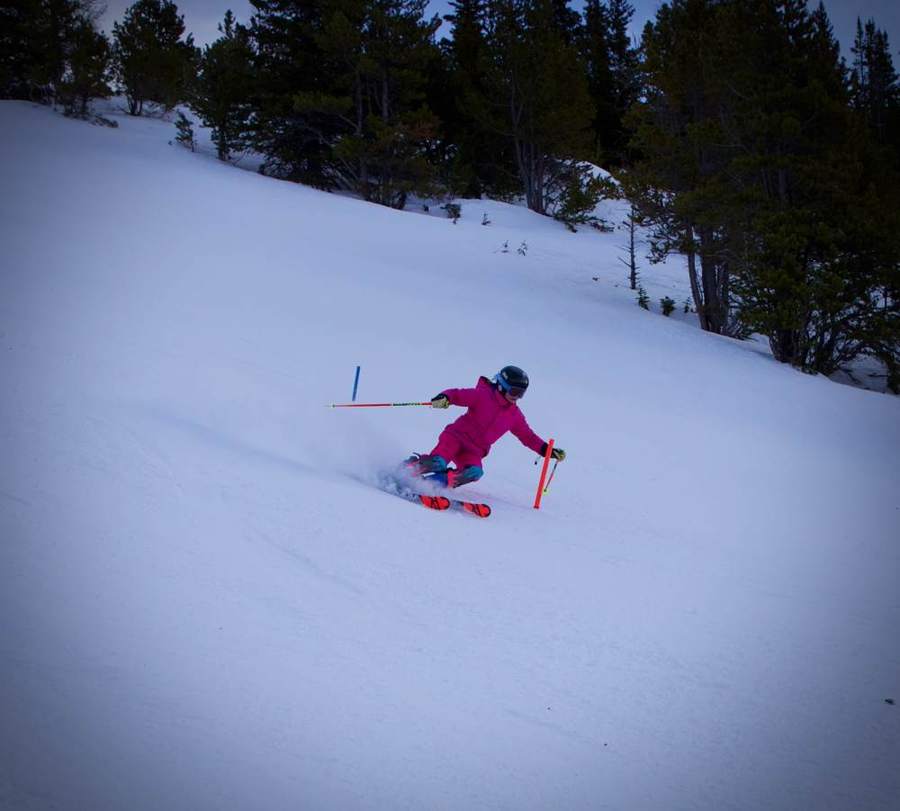
The nuts and bolts of why skiing is so hard to learn are that it is counterintuitive. Instead of controlling the turn and direction as you would on a snowboard, skiing requires you to divide your body into two parts. Your upper body is always going to be looking for and facing the fall line. Your hands are forward and within sight at all times. It's often described as holding a keg of beer in front of you. Your lower body is going to be acting independently, going left and right. This is difficult for first-time skiers to grasp. You need to feel pressure on your shin from the tongue of your boot at all times to ensure your weight is distributed centred on the ski. Pole planting helps to initiate turns at the right time, as compression and flexion are what make the ski work. This is especially true for deep powder snow.
Combining all the physical positioning at the same time will take time to retrain your body so it becomes ingrained in muscle memory. My journey to becoming a skier will be much different than yours, but what worked for me will work for you, too. Namely, don’t try to learn too much at once. Focus on one thing at a time. One day it may be keeping your hands out where you can see them at all times, so you don’t throw your shoulder out, create bad body posture, and let the ski accelerate faster than you'd like. Next, focus on feeling the front of your boot on your shin, keeping your weight centred on the ski. It’s a hard sport to learn and impossible to master. Even World Cup ski racers are always trying to improve their technique, so don’t be too hard on yourself if it seems like you're not progressing. You are going to hit walls, but as a new skier, the biggest hurdles are much farther ahead.
Whatever you pick
No matter what equipment you use, the point is to have fun. Every stage of these sports is exhilarating as you reach a new milestone. For a boarder, it might be the first time riding switch. The skier will remember the moment they mastered the parallel turn for the first time, and suddenly the blue runs are part of their playground. The other thing is to be progressive in learning. Challenge yourself, but not in a way that will get you hurt. Don’t let peers pressure you into doing something you are not comfortable with or that you know is above your skill level. They should add a box on the SARS accident form: “Was this accident caused by peer pressure?” It would get ticked at least 20% of the time.
OK, speech over. I will get off my soapbox and let you discover for yourself. In some ways, I am envious of you if you are just starting out. Skiing and boarding are incredibly fun, and in this case, the journey is much better than the destination.
Joe McKay